Best Stretch Cord for Bracelets: 7 Picks Compared by Strength, Knot, and Bead Size
By BENECREAT Craft Team · Published · Updated
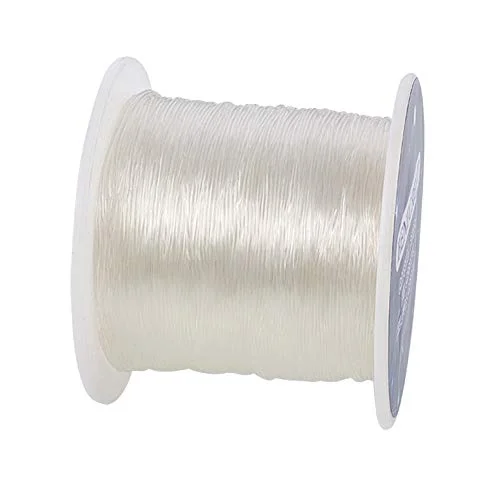
Buy 0.8 mm clear round stretch cord from Stretch Magic, Beadalon Elasticity, or Powercord for 6 to 10 mm beads, 0.5 mm for seed beads and small crystals, and 1 mm for chunky wood or lava. Tie a surgeon’s knot on pre-stretched cord, glue it, and hide it in a bead. Choose Opelon when the knot has to be invisible and a fabric-covered elastic for pony-bead kandi.
That is the whole decision for most bracelets. The rest of this guide is the evidence: the diameters and colors each maker actually sells, the breaking strengths that have been published, the bead-hole numbers that decide diameter, and the honest weaknesses of every cord on the list, including the one we sell.
The Seven Picks at a Glance
| Pick | Best for | Construction | Sizes | Weak spot |
|---|---|---|---|---|
| Stretch Magic (Pepperell) | Default choice, widest size range | Solid single-strand elastic | 0.5, 0.6, 0.7, 0.8, 1 mm; 1.5 and 1.8 mm on shorter spools | Reported to go brittle with age; no published strength |
| Beadalon Elasticity | Colored cord that matches metal beads | Solid latex-free rubber cord | 0.5, 0.8, 1 mm | Only three sizes; 100 m spools cost more than generic |
| Powercord (Fire Mountain Gems) | Heavy beads, anyone who wants a strength rating | Solid latex-free elastic | 0.4 to 2 mm in seven steps | House brand of one retailer; the full size range lives there, not on Amazon |
| Opelon (Beadsmith) | Smallest, most secure knot | Flat fibrous latex-free cord | 0.7 mm | Fibers fray at sharp holes; effectively one width, black or white |
| Beadalon Elonga and Gossamer Floss | Seed beads and delicate stringing | Bonded multi-strand elastic floss | 0.3, 0.7, 1 mm | Splits with wear; 0.3 mm rated 3-pound test |
| Fabric-covered elastic | Pony beads, kandi, kids’ bracelets | Rubber core in a woven sleeve | About 1 to 2 mm | Too thick for gemstone holes; sleeve shows |
| BENECREAT crystal elastic cord | Bulk 0.8 mm for production runs | Clear elastic fiber cord | 0.8 mm only, about 150 m | No published material or strength; one size, one color |
Two names that come up on forum threads are missing from the list on purpose. Generic no-name crystal cords sold by the dozen vary too much roll to roll to recommend as a category, and Cousin-brand craft elastic is fine but adds nothing the picks above do not already cover.
Specifications Side by Side
Everything below comes from the makers’ own pages and spec sheets, or from the retailer that owns the brand. Where a manufacturer does not publish a number, the cell says so rather than guessing.
| Cord | Material | Diameters | Colors | Published breaking strength | Latex-free | Made in | Spool |
|---|---|---|---|---|---|---|---|
| Stretch Magic | Solid elastic monofilament (retail listings describe it as polyurethane) | 0.5, 0.6, 0.7, 0.8, 1 mm (100 m); 1.5 mm (50 m); 1.8 mm (25 m) | Clear, pearl, black | Not published | Not stated by maker | Pepperell Crafts, Pepperell, Massachusetts, established 1917 | 5, 25, 100 m |
| Beadalon Elasticity | Latex-free rubber cord | 0.5 mm (.020 in), 0.8 mm (.032 in), 1 mm (.039 in) | Clear, black, satin silver, satin gold, rose gold | Not published | Yes | USA | 5, 25, 100 m |
| Powercord | Latex-free elastic | 0.4, 0.5, 0.7, 0.8, 1, 1.5, 2 mm | Clear, black, blue, grey, rose, green, turquoise (varies by size) | 3.5 lb (0.4), 4 lb (0.5), 7 lb (0.7), 8.5 lb (0.8), 14 lb (1), 22 lb (1.5), 21.5 lb (2) | Yes | Not stated | 25 m; 100 m for 1 mm No-Fray |
| Opelon | Flat fibrous cord | 0.7 mm (a flat ribbon, so the figure is its width) | Black, white | Not published | Yes | China | 5, 25 m |
| Beadalon Elonga | Multi-fiber bonded elastic ribbon | 0.3, 0.7, 1 mm | White plus 12 colors | 3 lb (0.3 mm) | Not stated | USA (Beadalon) | 25 m |
| Fabric-covered elastic | Rubber core, woven textile sleeve | About 1 to 2 mm | Many | Not published | Varies | Varies | Varies |
| BENECREAT crystal elastic | ”Elastic fiber” per listing | 0.8 mm | Clear | Not published | Not stated | Not stated | About 150 m |
Two things stand out. Only Powercord and Elonga publish a strength rating, and in the Powercord line that rating climbs steeply with diameter up to 1.5 mm. And the three big single-strand brands all agree on the same core sizes: 0.5, 0.8, and 1 mm are the standard steps, with 0.7 mm as Stretch Magic’s and Powercord’s half-step.
What Diameter Do You Need?
Cord diameter is decided by the bead hole, not by preference. The two rules from manufacturers sound contradictory but are the same rule from two sides. Beadalon says to fill the bead holes as much as you can, because a loose bead saws at the cord every time the bracelet moves. The Spruce Crafts guide says to choose a cord just slightly smaller than the hole, because a cord that has to be forced through gets scraped on the way in. Put together: the largest diameter that still passes through freely.
| Beads | Typical hole | Cord to use |
|---|---|---|
| 15/0 seed beads (about 1.3 mm) | 0.4 to 0.6 mm | 0.3 mm Elonga floss, or skip elastic |
| 11/0 seed beads (about 2.1 mm) | 0.6 to 0.8 mm (Miyuki rocaille: 0.8 mm) | 0.5 mm single, or 0.4 mm Powercord |
| 8/0 seed beads (about 3.1 mm) | 0.9 to 1.2 mm (Miyuki: 1.1 mm) | 0.7 or 0.8 mm; 0.5 mm doubled |
| 6/0 seed beads (about 4 mm) | 1 to 1.5 mm (Miyuki: 1.5 mm) | 0.8 or 1 mm |
| 4 to 6 mm gemstone and glass rounds | Usually 0.7 to 1 mm, varies by cutter | 0.7 mm, or 0.5 mm doubled if the drill is tight |
| 8 to 10 mm gemstone rounds | Usually about 1 mm | 0.8 mm (Fire Mountain’s recommendation for 8 mm), or 1 mm |
| Wood, lava, large-hole glass, pony beads | 1.5 mm and up | 1 to 2 mm, or fabric-covered elastic |
Seed-bead hole ranges are from the Beadaholique size chart for Czech seed beads and Fire Mountain’s Miyuki chart. Gemstone holes are not standardized; a strand of 8 mm beads from two suppliers can differ by a few tenths of a millimeter, so test one bead before cutting cord. If you are storing mixed strands, our guide to organizing beads and gemstones covers labeling hole sizes so you only measure once.
Round, Flat, Floss, or Covered: Why Construction Matters More Than Brand
Stretch cords fall into four constructions, and each one knots and fails differently.
Solid round monofilament (Stretch Magic, Elasticity, Powercord, BENECREAT crystal cord) is a single smooth strand. It slides through beads easily, stretches and recovers evenly, and disappears behind clear or light beads. The same smoothness is its weakness: a knot on smooth cord has nothing to bite into, so it loosens under repeated stretching unless it is glued. Failure mode is a snapped strand, usually at a knot or at a sharp bead hole.
Flat fibrous cord (Opelon) is a bundle of fine fibers pressed into a narrow ribbon. It knots like thread: the fibers grip each other, so the knot is tiny, stays put, and hides inside a 6/0 seed bead. Makers on beading forums call it the easiest cord to knot and note that it can fray. Failure mode is visible fraying at a rough hole long before the cord parts, which is a useful warning.
Bonded multi-strand floss (Beadalon Elonga, Gossamer Floss) is several stretchy filaments bonded side by side. It goes finer than any round cord, down to 0.3 mm, which is why it exists for seed beads. Beadalon’s own blog notes that once it begins to wear it starts to split, which is easy to see and replace. Treat it as a delicate cord for light beads.
Fabric-covered elastic is a rubber core inside a knitted sleeve, the string sold for kandi and kids’ pony-bead bracelets. The sleeve gives a knot real grip and hides frayed ends, but it is 1 mm or thicker and shows between beads, so it is wrong for gemstone stacks.
The Picks in Detail
1. Stretch Magic: the default, with an aging caveat
Pepperell Crafts, in business in Pepperell, Massachusetts, since 1917, makes Stretch Magic and sells it in more sizes than anyone else: 0.5, 0.6, 0.7, 0.8, and 1 mm on 100-meter spools, plus 1.5 mm on 50-meter and 1.8 mm on 25-meter spools, in clear, pearl, and black. The 0.8 mm clear on a 25-meter spool is the one to start with, and the same size comes on a 100-meter spool if you already know you like it. Google’s AI Overview for this query names it the best overall, and most craft stores stock it, which matters when you run out mid-project.

Pepperell’s own knot recommendation is a Carrick bend or a surgeon’s knot. The caveat is age: the most upvoted complaint on the r/Beading thread that ranks first for this query is that Stretch Magic “after some time dried out and became brittle,” and a separate thread asks whether unopened spools from 2006 are still usable. Buy the length you will use in a year or two, not a lifetime supply, and store it in a closed drawer.
2. Beadalon Elasticity: colored cord that matches your metal
Elasticity is a latex-free rubber cord made in the USA in three diameters, 0.5, 0.8, and 1 mm, and five colors: clear, black, satin silver, satin gold, and rose gold. The 0.8 mm clear, 25 meters is the direct comparison to Stretch Magic; the 100-meter spool is the production size. The metallic tones are the reason to choose it. A gold-plated bead stack on clear cord shows a glassy line at every gap; on satin gold cord the gap reads as part of the design. Beadalon’s Meredith recommends 0.8 mm clear as the one spool to start with if you are buying a single size, and her advice on filling the bead hole is the most useful single sentence on cord diameter in any maker’s literature.

The weak spot is range: no 0.7 mm half-step, nothing above 1 mm, and no published strength figure.
3. Powercord: the cord with numbers
Fire Mountain Gems’ house-brand Powercord is the only single-strand elastic on this list with a published breaking strength for every size, and the pattern is the useful part, because no other single-strand brand publishes anything: 3.5-pound test at 0.4 mm, 4 pounds at 0.5, 7 at 0.7, 8.5 at 0.8, 14 at 1 mm, 22 at 1.5 mm, and 21.5 at 2 mm. That jump from 8.5 to 14 pounds between 0.8 and 1 mm is the argument for going up a size whenever the holes allow.

Fire Mountain’s experts recommend Powercord for its strength and resilience, specify 0.8 mm for an 8 mm beaded bracelet, and finish with a surgeon’s or square knot plus a drop of E6000 (which stays flexible after curing) or Loctite 409 gel (which fills the gap between cord ends). It is latex-free and comes in clear, black, blue, grey, rose, green, and turquoise depending on size, on 25-meter spools, with a 100-meter “No-Fray” 1 mm version. The drawback is distribution. It is Fire Mountain’s own brand, so the full seven-size range and all the colors exist only in their catalog; on Amazon you will find the common sizes resold, such as 0.8 mm clear and the 1 mm 14-pound-test spool, and little else.
4. Opelon: the knot you cannot see
Opelon, sold under the Beadsmith name, is a flat fibrous cord, 0.7 mm, latex-free, made in China, in black or white on 5- and 25-meter spools. The retailer copy calls it the gold standard for stretch jewelry and stresses that it does not require crimps and knots easily; makers on r/braceletcraft put it more usefully: “Opelon can fray but it’s very easy to knot. Knot is very small, less likely to unravel and easy to hide inside a bead.”

That is the whole case. If your design has no bead with a hole large enough to swallow a glued surgeon’s knot in 0.8 mm round cord, Opelon’s thread-like knot solves the problem. Its limits are a single working width, two colors, and fibers that fray against sharp-edged holes, so keep it away from faceted bicones.
5. Elonga and Gossamer Floss: for beads too small for anything else
Beadalon’s Elonga is a bonded multi-fiber elastic ribbon in 0.3, 0.7, and 1 mm, in white and 12 colors; Gossamer Floss is the generic name for the same construction. The 0.3 mm white, 25 meters, rated 3-pound test, is the only elastic that passes comfortably through 15/0 and tight 11/0 seed beads, which makes woven stretch bracelets and delicate seed-bead stacks possible. The trade-off is durability: it splits as it wears and frays over time, so it belongs on light pieces, not on a stack of 10 mm stones.

6. Fabric-covered elastic: the kandi string
For pony beads, kandi cuffs, and children’s projects, the smooth cords above are the wrong tool: the beads have 3 to 4 mm holes and the wearer is going to yank the bracelet on and off. Fabric-covered elastic, a rubber core inside a knitted sleeve at roughly 1 to 2 mm, holds a plain knot without glue and tolerates abuse. At the time of writing the top seller in Amazon’s beading-cord category is exactly this type: a 1 mm rainbow fabric-covered string, sold by the hundreds of feet. It is too thick for gemstone holes and the sleeve is visible between beads, so it stays in its lane.

7. BENECREAT crystal elastic cord: bulk 0.8 mm, and where it falls short
The BENECREAT crystal thread elastic cord is a clear single-strand cord in one size, 0.8 mm, on a roll of about 150 meters. That is the diameter Fire Mountain’s experts name for 8 mm beads and the one Beadalon suggests as a first spool, and 150 meters is half again the length of a standard 100-meter Stretch Magic spool. If you make stacking bracelets in quantity, for markets, parties, or a small shop, that is the reason to buy it: one size that fits the most common beads, in bulk, on a roll that stores neatly.

The honest limits are on the spec sheet, or rather not on it. The listing describes the material only as “elastic fiber,” publishes no breaking strength, and offers no other diameter or color, so there is no 0.5 mm for seed beads and no 1 mm for chunky stones from the same brand. Like every smooth clear cord it needs a glued surgeon’s knot, and like every unrated cord it should be tested on your own beads before a production run: string one bracelet, wear it for a week, and only then string fifty. For a first spool to learn on, or for a maker who needs a range of sizes and a strength rating, Stretch Magic or Powercord is the better buy.
How to String a Stretch Bracelet That Does Not Snap
Every manufacturer’s instructions agree on the same sequence; the differences are details.
- Cut generously. Fire Mountain’s tutorial says to measure the length you need and add 4 inches for the knot. For a standard wrist that means roughly 11 to 12 inches of cord.
- Pre-stretch. Beadalon calls this essential: pull the cut length firmly several times to take out the initial slack, finding the point that removes slack without stressing the cord. Skip it and the finished bracelet develops gaps after a week of wear.
- Fill the hole. Choose the diameter from the table above. If you must double a 0.5 mm strand, string both strands together and treat them as one cord from here on.
- Pad the sharp beads. Faceted crystals and some drilled stones have edges; a seed bead on either side keeps the edge off the cord. The Bead Chest recommends the same trick for irregular holes.
- Tie a surgeon’s knot on stretched cord. Two wraps on the first pass, one on the second, pulled tight from all sides. Pepperell and Fire Mountain both name this knot; a square knot is the acceptable alternative.
- Glue it. A small drop of a flexible adhesive: E6000 Jewelry and Bead or G-S Hypo Cement, whose needle applicator is easier to control on a knot this small. Fire Mountain also names Loctite 409 gel for its gap-filling, and singles out E6000 because it stays flexible after curing, which a rigid glue at a stretching knot does not. Let it cure before the next step.
- Hide the knot. Trim the tails to a couple of millimeters and slide the knot into the nearest large-hole bead.
- Put it on properly. Stretch the bracelet wide over the hand rather than rolling it. Rolling concentrates the strain at one point, which is where snaps happen.
When Stretch Cord Is the Wrong Choice
Elastic is a convenience material. Three designs should not be built on it at all.
Heavy stone bracelets. Above about 10 mm, or with dense stones like hematite, every stretch over the hand loads the cord harder and every bead grinds at its hole. Even a 1 mm Powercord rated 14 pounds is working near its limits on a strand of 12 mm hematite, and makers restring these often. String them on 49-strand beading wire with crimps and a clasp instead.
Faceted crystal stacks. Bicones and rondelles have hole edges that cut. Spacers help, but a bracelet of nothing but bicones is a beading-wire job. A 7-strand nylon-coated stainless cable such as our 0.38 mm bead stringing wire with clamshell bead tips gives a clean finish with no knot to hide.
Pieces you sell for daily wear. Any elastic ages. If a customer will wear it every day, either build on wire and a clasp or tell them plainly that a stretch bracelet is a one-to-two-year item and offer restringing.
Where BENECREAT Is Not the Right Answer
Our cord is one size and one color, so it is the wrong purchase for anyone who needs 0.5 mm for seed beads, 1 mm or thicker for wood and lava, or a colored cord for metal beads. For those, buy Stretch Magic or Powercord by the size, Elasticity for the metallic tones, and Elonga for anything finer than 0.5 mm. We would rather you buy the right cord elsewhere than the wrong one from us.
A First Shopping List
For someone starting with 6 to 10 mm gemstone and glass beads: one 25-meter spool of 0.8 mm clear cord from any of the three single-strand brands (Stretch Magic, Elasticity, or Powercord); one spool of 1 mm for the chunky strands that turn up; a small tube of G-S Hypo Cement or E6000; and a pack of 6/0 seed beads in a neutral color to use as knot-hiding beads and spacers. Add Opelon when a design leaves nowhere to hide a knot, and a bulk 0.8 mm roll only once you know how many bracelets you actually make in a month.
Sources
- Pepperell Crafts, Stretch Magic 100-meter spools product page (sizes, colors, knot recommendation, company history).
- Beadalon, “Secrets to Making Stretch Cord Bracelets” (blog, Meredith): Elasticity and Elonga sizes and colors, hole-filling and pre-stretch advice, knotting.
- Beadalon Elasticity retail listings: latex-free rubber, made in USA, inch equivalents.
- Fire Mountain Gems, elastic cord category (Powercord pound-test ratings by diameter, colors, spool lengths; Elonga 0.3 mm rating).
- Fire Mountain Gems, Ask the Experts: cord recommendation, 0.8 mm for 8 mm beads, surgeon’s and square knots, E6000 and Loctite 409.
- Fire Mountain Gems, bead stringing video tutorial: add 4 inches for the knot.
- Eureka Crystal Beads and Walmart listings for Beadsmith Opelon (flat fibrous, 0.7 mm, latex-free, China).
- Beadaholique seed bead size chart (Czech hole ranges); Fire Mountain Gems bead charts (Miyuki rocaille hole sizes).
- The Bead Chest, “Jewelry Stringing Materials” guide (Gossamer Floss construction and fraying, spacer advice).
- The Spruce Crafts, “How to Select Stretch Cord” (cord slightly smaller than hole; surgeon’s knot).
- r/Beading and r/braceletcraft threads on stretch cord (Stretch Magic aging; Opelon knot behavior).
- BENECREAT crystal thread elastic cord listing, ASIN B0762HGJWB (0.8 mm, about 150 m, clear, material stated as elastic fiber).
Reviewed by the BENECREAT Craft Team.
Frequently Asked Questions
What is the strongest stretch cord for making bracelets?
Among cords with a published rating, Fire Mountain Gems' Powercord tops out at 22-pound test in 1.5 mm and 21.5-pound test in 2 mm, with 14-pound test at 1 mm and 8.5-pound test at 0.8 mm. Strength tracks diameter in every brand, so the strongest cord you can use is the thickest one that still passes through your bead holes. For a normal 8 mm gemstone bracelet that is 0.8 or 1 mm; doubling a 0.5 mm strand is the fallback when holes are too small for either.
What is the best stretchy elastic string for bracelets?
For most makers, a 0.8 mm single-strand polyurethane-type cord from Stretch Magic, Beadalon Elasticity, or Powercord. All three knot with a surgeon's knot, hold their stretch through daily wear, and come in clear so the cord disappears behind the beads. Opelon is the pick when you want the smallest possible knot, and a fabric-covered elastic is the pick for pony-bead and kandi bracelets where knot grip matters more than looks.
What size stretch cord should I use for bracelets?
Match the cord to the bead hole: 0.5 mm for 11/0 seed beads and small crystals with 0.6 to 0.8 mm holes, 0.7 or 0.8 mm for 6 to 10 mm gemstone and glass rounds with the usual 0.8 to 1 mm holes, and 1 mm for chunky wood, lava, or large-hole beads. Fire Mountain's experts name 0.8 mm for an 8 mm beaded bracelet, and Beadalon's own advice is to fill the hole as fully as you can so the bead cannot saw at the cord.
What is the best knot for a stretch bracelet?
The surgeon's knot: two wraps on the first pass, one on the second, pulled tight from all sides while the cord is stretched. It is the knot Fire Mountain Gems, Beadalon, and Pepperell all recommend, and a square knot is the acceptable substitute. Add a drop of flexible adhesive such as E6000 or G-S Hypo Cement, let it cure, then trim and slide the knot inside the nearest bead. Without glue, a knot on smooth clear cord tends to work loose under repeated stretching.
Why do stretch bracelets break?
Four causes cover almost every failure: cord too thin for the bead weight, a knot that was never glued, sharp or rough bead holes cutting the cord over time, and cord that aged out. Faceted crystal bicones and some drilled stone beads have edges that act like tiny blades, so pad them with seed-bead spacers or move that design to beading wire. Rolling a bracelet over your hand instead of stretching it wide concentrates the strain at one point, a common way to snap any cord.
Does stretch cord dry out or lose its stretch?
Yes, slowly. Makers on beading forums report Stretch Magic going brittle after years in storage, and every elastic cord loses some recovery with sun, heat, lotion, and repeated over-stretching. Pre-stretching a cut length before you string it removes the initial slack so the finished bracelet does not develop gaps, and storing spools in a closed container away from light keeps them usable longer. Restring bracelets you wear daily every year or two; treat it as maintenance, not failure.
Should I double the stretch cord?
Only when your bead holes are too small for a single strand of the right strength. Doubling 0.5 mm cord roughly doubles the load it carries and lets you use seed beads and small crystals, but the two strands must be knotted together as one and the knot gets bulkier. If a single 0.8 or 1 mm strand fits, it is the simpler and more reliable build.
Can I use sewing elastic or hair-tie elastic for bracelets?
Not for anything you want to last. Sewing elastic is a woven or braided band with rubber threads inside; it is too wide for bead holes, frays at the cut ends, and its knots slip. Jewelry stretch cord is either a solid polyurethane-type monofilament or a bonded fibrous cord engineered to knot tightly and recover its length. The Spruce Crafts guide makes the same point: craft or sewing elastic is the wrong material for this job.
The bulk 0.8 mm spool for production runs
BENECREAT clear crystal elastic cord, 0.8 mm and about 150 meters to a roll: the size Fire Mountain's experts recommend for 8 mm beads, in enough length for a season of stacking bracelets.
See the 150-meter roll