Best Flush Cutters for Jewelry Wire: Xuron vs Lindstrom vs Tronex vs Knipex, With Capacities
By BENECREAT Craft Team · Published · Updated
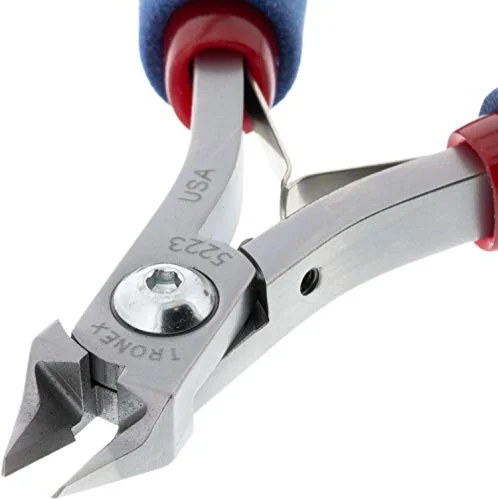
Buy the Xuron 2175 Maxi-Shear if you want one cutter that handles every soft jewelry wire to 12 gauge. Buy Lindstrom or Tronex if you cut fine wire all day and want the truest flush face. Never use any of them on memory wire or steel.
That order is the market’s, not ours. We read 28 threads from r/jewelrymaking, r/WireWrapping, r/chainmailartisans, r/Beading, and r/SilverSmith, 776 comments in total, and pulled the capacity, hardness, length, and warranty figures from Xuron, Lindstrom, Tronex, Knipex, Hakko, Beadalon, and The Beadsmith directly. BENECREAT does not make cutters, so every pick here is another company’s tool. No brand paid for placement, and where Amazon listings looked like third-party resellers of a brand that does not sell there, we say so.
The Seven Picks at a Glance
| Use | Pick | Soft-wire capacity | Cut type | Made in | Watch out for |
|---|---|---|---|---|---|
| Most makers, all-round | Xuron 2175 Maxi-Shear | 12 AWG, 2 mm | Micro-Shear bypass | USA | Offset blades by design; buy from authorized retailers |
| Fine wire and bead stringing | Xuron 410 Micro-Shear | 18 AWG, 1 mm | Micro-Shear bypass | USA | Not for hardened wire |
| Professional flush cut | Tronex 5222 | 19 AWG, 1.05 mm | Flush, thin bevel | USA | One-year warranty; fine wire only |
| The industry’s gold standard | Lindstrom RX 8141 | 14 to 16 AWG, 1.6 mm | Flush, oval head | Spain | Amazon listings are resellers; check the seller |
| Lifetime-warranty crossover | Knipex 78 61 125 Super Knips | 14 AWG, 1.6 mm soft; 1.2 mm medium-hard | Ground edges, no bevel | Germany | Struggles above 1.2 mm; an electronics tool |
| Budget, jewelry brand | Beadalon Designer Series semi-flush | Not published | Semi-flush | Not stated | Larger pinch than flush; dulls sooner |
| Hard wire and memory wire | Beadsmith tungsten carbide flush cutter | Memory wire and steel findings | Flush, carbide jaws | Not stated | Keep it for hard wire only |
What Makers Actually Agree On
- Xuron is the answer to “which cutter.” Named 44 times across 18 threads, more than any other brand. “For cutters Xuron is the name that comes up again and again.” “Xuron tools are great and only a little more than generic, but they pay for themselves in quality.” “Xuron all the way. Fifteen-dollar pliers that I prefer to my fifty-dollar ones.” Every jewelry teacher’s page in the search results, from Metalsmith Society to Silvera Jewelry School, recommends it too.
- Lindstrom is the gold standard, with an asterisk. Twenty-four mentions in eleven threads: “Lindstrom flush cutters are the gold standard in the jewelry industry. They are expensive but worth it.” Owners report pairs 15 and 20 years old that still cut like new. The asterisk is a split over the current line, which several makers say is not what their old Swiss-made pairs were, and one report of two new pairs shearing a blade on 24 gauge wire with no warranty reply.
- Tronex is what the pros move up to. “The best on the market now.” “Expensive but sooo nice.” Also the most honest about limits: “limited on what they can cut: 18ga and finer and soft metals.”
- Knipex is loved by silversmiths and misunderstood by everyone else. On r/SilverSmith the Super Knips “cut clean through sterling wire with no effort” and are “the best value for cutters.” On the chainmail sub, “Knipex” means eight-inch mini bolt cutters for steel rings, a different tool entirely.
- Hard wire is the killer. Fifty-four comments in the corpus describe dented, nicked, or holed blades, and almost every one traces back to memory wire, stainless, or steel. Spring failures: zero. “Dulling a one-dollar blade is better than potentially creating a hole in your flush cutters, ask me how I know.”
- Cheap is fine as a strategy, not as a hope. Some makers buy bulk packs of cheap cutters and replace each after months; most keep a Xuron for daily work and a hardware pair for anything hard. Nobody recommends the unbranded five-inch cutters that top Amazon’s best-seller list for anything but that consumable role. On buying cutters from Amazon at all, the most upvoted line was blunt: “Amazon is a wasteland. You want Fire Mountain Gems.”
Flush, Semi-Flush, Razor Flush, and Micro-Shear
Every spec sheet uses these words, and the makers define them precisely. Tronex’s own glossary is the clearest.
| Cut type | Bevel | Pinch on the cut end | Durability | Capacity | Who makes it |
|---|---|---|---|---|---|
| Semi-flush | Small bevel | Small pinch | Highest | Highest | Beadalon, Beadsmith, Lindstrom micro-bevel |
| Flush | Very thin bevel | Exceptionally small | High | High | Tronex 5222, Lindstrom RX 8141 and 8151, Beadsmith soft wire cutter |
| Razor flush, ultra-flush | No bevel | Almost none | Needs more frequent sharpening | Lower | Tronex 7223, Lindstrom RX 8152 |
| Micro-Shear bypass | Two blades pass each other | Flat on one side, slight offset | High; no edge-to-edge impact | Highest per dollar | Xuron |
The Xuron row explains the most common complaint about the most popular cutter. Its blades are offset by design and shear the wire like scissors, which Xuron patented in the 1970s and which gives a flat cut with about half the effort of a conventional cutter. Two Reddit threads in 2026 read that offset as a defect. It is not, but a pair whose two sides are badly misaligned is faulty, and the top reply in one of those threads is the right advice: buy from authorized retailers, because Xuron does not sell on Amazon directly and says it will not warranty a suspected counterfeit.
Reading a Capacity Rating
Three things the spec sheets assume you know.
- Ratings are for soft copper. Tronex: “Except for hard-wire cutters, cutting capacity ratings are based on soft copper wire.” Half-hard sterling and brass count as harder; cut a gauge or two under the rating.
- Ratings are for the throat, not the tips. The tips of a precision cutter handle roughly four gauges less than the published figure, so cut heavy wire deep in the jaws. Rio Grande’s care note on the Lindstrom 8152 says the same: use the center of the jaws to keep the tips from breaking.
- Gauge and millimeters. 12 AWG is 2.0 mm, 14 AWG 1.6 mm, 16 AWG 1.3 mm, 18 AWG 1.0 mm, 20 AWG 0.8 mm, 22 AWG 0.6 mm. Our jewelry wire gauge chart has the full table.
The Picks, in Detail
1. Most makers, all-round: Xuron 2175 Maxi-Shear
Xuron calls the 2175 its most popular cutter, and the maker threads agree with the sales figures. It is rated for soft wire up to 12 gauge, 2 mm, which covers every jewelry wire short of cuff stock; the blades are high-carbon steel heat-treated to Rockwell 55 to 56 and an eighth of an inch thick; it has a return spring and rubber grips; and it is made in Saco, Maine. The bypass blade design is why it cuts thick wire with less hand strength than a bevel cutter of the same size, and why it stays sharp: there is no edge-to-edge impact. The listing linked here is the 2175A full-flush version, which Xuron rates to 14 gauge for very soft materials; the standard 2175 drifts in and out of stock on Amazon, and the three-pack is the bench-and-spare buy.

Three honest limits. The cut is flat on one side and slightly offset, not the mirror-smooth face a Lindstrom Ultra-Flush leaves on fine wire, and a chainmail maker noted that the shearing action can distort a jump ring enough to need reshaping. It dents on hard wire like every precision cutter; Xuron’s own care page says so and points to its 2193 hard-wire cutter. And because Xuron does not sell on Amazon, check that a listing is a brand-registered retailer before buying; the warranty covers defects in material and workmanship and excludes marketplace counterfeits.
2. Fine wire and bead stringing: Xuron 410 Micro-Shear
Beaders cut beading cable and 22 to 28 gauge wire all day, and the Maxi-Shear is more cutter than that needs. The Xuron 410 is the smaller Micro-Shear rated for soft wire to 18 gauge, 1 mm, and Xuron pitches it for exactly this: hobbies, crafts, and bead stringing, including flexible stranded beading wire and monofilament. The tapered head reaches into a crimp to trim the tail flush. Its sibling, the LX Micro-Shear, is the lighter-duty version at a similar price, and the original 170-II, five inches and 16 to 18 gauge, is the model that carried the Micro-Shear patent for forty years.

Same rule as the big one: not for hardened wire, and 18 gauge is the ceiling, so it is the second cutter for a wire wrapper, not the first.
3. Professional flush cut: Tronex 5222
Tronex makes the cutters electronics assemblers use under a microscope, and jewelers who buy one tend to describe it the same way: “sooo nice.” The 5222 is the medium taper-relief head with a flush edge, meaning a very thin bevel and an exceptionally small pinch, rated for 0.1 to 1.05 mm soft copper, 38 to 19 gauge, 117 mm long, with carbon-steel blades at Rockwell 62 to 63, leaf springs, and a tip protector in the box. Made in the USA. The 7223 is the razor-flush version on long ergonomic handles, 0.1 to 0.9 mm, for the cleanest cut face at the cost of more frequent sharpening. An electronics reviewer who counted found zero signs of wear after 100 cuts.

Two things to know before paying professional money. Tronex’s warranty is one year against defects, not lifetime; an older supplier chart still says lifetime and is out of date. And 19 gauge is the ceiling, which owners confirm: “limited on what they can cut: 18ga and finer and soft metals.” This is a cutter for fine wire, weaving, and finishing, not for 12 gauge frames.
4. The industry’s gold standard: Lindstrom RX 8141 and 8150
Lindstrom has made hand tools since 1856, and in the jewelry trade its RX series is the reference cutter: “Lindstrom flush cutters are the gold standard in the jewelry industry. They are expensive but worth it.” The RX 8150 is the micro-bevel oval head, 138 mm and 73 g, rated 0.3 to 1.6 mm solid copper, with induction-hardened edges at Rockwell 63 to 65, a three-position replaceable Biospring, and two-component ERGO handles; the 8151 is the same head with a flush edge, and the 8152 the Ultra-Flush, rated to 1.25 mm because the beveless edge is finer. The RX 8141, the flush oval head rated to 16 gauge, is the one with a stable Amazon listing from a maker-supply reseller. Owners of old pairs report 15 and 20 years of service with nothing replaced but the plastic springs, and the company offers factory reconditioning.

The cons are specific. Lindstrom does not sell on Amazon; the listings are resellers, one of them under a “Generic” brand field, so check the seller or buy from Rio Grande or Otto Frei. Country of origin on current tools is Spain, and a vocal group of makers says the redesigned handles and the move from Swiss production made the tools worse; one reported two new pairs shearing a blade on 24 gauge wire and no response to a warranty request. And the price is four to five times a Xuron, which is why “if you’re not planning to wrap long term they might not be worth the price to you” was the fairest summary in the threads.
5. Lifetime-warranty crossover: Knipex 78 61 125 Super Knips
The Knipex Super Knips are an electronics cutter that silversmiths adopted: ground edges without bevel, a shear cut with a controlled micro offset, 125 mm and 56 g, about a fifth lighter than a conventional electronics plier, rated 0.2 to 1.6 mm soft wire and 1.2 mm medium-hard, made in Germany, and covered by a lifetime limited warranty for the original purchaser in the United States and Canada. On r/SilverSmith the build quality is “in a different league to the budget options,” and one maker who has spent years on Knipex tools called them “the best value for cutters” because they last many times longer than a cheap pair.
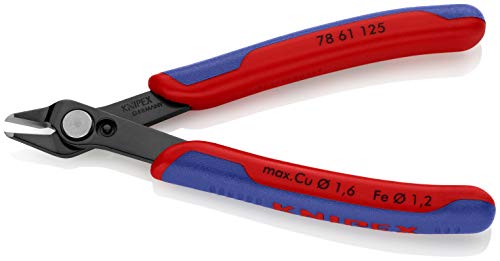
The limit is the one Knipex publishes and a jeweler confirmed: “It starts to struggle at anything larger than 1.2mm,” and pushing hard wire through it dented the edge. Treat it as a fine-to-medium wire cutter with the best warranty on this list, not as a Maxi-Shear replacement. And if a chainmail forum tells you to buy Knipex, they mean the mini bolt cutters for steel rings.
6. Budget, jewelry brand: Beadalon Designer Series semi-flush
Between the unbranded five-inch cutters and the Xuron sits the tier the jewelry brands own. The Beadalon Designer Series semi-flush cutter has the construction details that matter at this price, a box joint and double leaf springs in stainless steel, in a 4.75-inch tool with vinyl-free grips. Semi-flush means a small bevel and a small pinch, which is the more durable edge and the one a beginner will not notice until they own a true flush cutter. The Beadsmith’s soft wire cutter, rated for 16 gauge and finer with a maximum of 1.3 mm copper, is the equivalent from the other mid-range brand, and its Hi-Tech flush cutter is the step up.

Neither brand publishes hardness figures, and one beader reported her Beadalon cutters dull within a year. That is the trade: buy this tier to learn on and to keep as the pair you are not afraid to ruin, then move the good wire to a Xuron.
7. Hard wire and memory wire: The Beadsmith tungsten carbide cutter
Every cutter above will be damaged by memory wire, stainless, or steel, so the seventh pick is the one that saves the other six. The Beadsmith’s tungsten carbide flush cutter, six inches with an elongated handle and double leaf springs, has carbide jaws made for memory wire and hard findings; Beadalon’s own advice is that memory wire “can permanently damage ordinary flush cutters,” and Fire Mountain’s is that a heavy-duty cutter for hard metal “will save the edges of your other wire cutters.” Beadalon’s memory wire shears are the beading-brand version of the same tool, and Xuron’s 2193 hard-wire cutter is the same idea from the brand above, worth searching for by name.

The rule that comes with it: label it, and never let it near soft wire, because a carbide hard-wire cutter is not a flush cutter for copper. A cheap hardware-store pair does the same job for the occasional cut, which is what many makers use.
What About the Cheap Ones?
The cutters at the top of Amazon’s best-seller rank are unbranded five-inch pairs, and they have a place: the consumable strategy. “I just bought a bulk pack of my favorite cheapies on Amazon, and I use one pair until it wears out, maybe eight months.” If that is your plan, the KATA mini flush cutters are the class in question; expect no published hardness, no resharpening, and a blade that goes in months rather than years. What the threads warn against is buying one of these as your only cutter and expecting it to last: “Don’t waste your money on the very cheapest tools. You’ll just end up upgrading really soon.”
Two other names come up. The Hakko CHP-170, an electronics cutter made in Italy and rated for 16 gauge copper, is a favorite on the tool and synth-building subs and was mentioned zero times in the jewelry subs; the three-pack is the sensible way to buy it if you want it. And Swanstrom, an American brand that resharpens its cutters, is the third professional name in silversmith and Facebook-group threads alongside Lindstrom and Tronex, “recommended by my teacher”; its S215E super-flush tip cutter is the one listing we found.
Jump Rings: The Cutter Is Not the Tool
Ask how to cut jump rings flush and the highest-voted answer is not a cutter: “Saw cut is best way in my opinion.” Every cutter leaves one flat side and one pinched side, so a coil cut with flush cutters gives rings with one good end each, and a Lindstrom Ultra-Flush gives “the best cut I’ve seen, but that’s only on one side.” A jeweler’s saw, or saw-cut rings bought by the hundred, is the answer for chain that closes cleanly. For everything else in a wire wrapper’s day, the seven cutters above cover it; the pliers that go with them are in our guide to jewelry making tools for beginners.
A Shopping List, by How Much You Cut
- Starting out: a Xuron 2175 and a cheap hardware pair for anything hard.
- Stringing beads: a Xuron 410 for cable and fine wire.
- Cutting fine wire all day: add a Tronex 5222 or a Lindstrom RX from an authorized dealer, and reserve it for wire under 18 gauge.
- Memory wire, stainless, steel findings: a carbide hard-wire cutter, labeled so nobody borrows it for copper.
- Silver sheet and bezel wire: shears, not cutters, which is a different guide.
The soft wire all of these are made for is in our jewelry wire range, and our guide to the best wire for jewelry making says which spool to cut first.
Sources
- Xuron, consumer cutters, the 2175 Maxi-Shear post, tool care and maintenance, the 170-II page, and the warranty FAQ
- Lindstrom, RX oval-head cutters and company history; Rio Grande, Lindstrom 8152 for country of origin and care advice
- Tronex, 5222, 7223, precision cutting glossary, selecting a cutter, and the limited warranty
- Knipex, 78 61 125 and the USA and Canada warranty; Hakko USA, CHP-170
- Beadalon, nippers and wire cutters; Fire Mountain Gems, A Guide to Cutting Tools
- Metalsmith Society, specialty pliers and cutters (a sponsored Xuron piece, cited for the maker’s description of the shear action); Jewelry Making Journal, Best flush cutter brand?
- Reddit threads, 28 in total from r/jewelrymaking, r/WireWrapping, r/chainmailartisans, r/Beading, and r/SilverSmith, 2020 to 2026, including best/sharpest cutters?, Flush cutters strong enough to cut jump rings?, Are flush cutters supposed to be like this?, Best wire cutters, and Searching for the best flush cutter; brand counts are from this corpus
Reviewed by the BENECREAT Craft Team.
Frequently Asked Questions
Xuron or Lindstrom: which flush cutter should I buy?
Xuron for most makers, Lindstrom for those who know they will still be cutting wire in ten years. Across 28 maker threads we read, Xuron was named 44 times as the affordable cutter that pays for itself; Lindstrom 24 times, usually as the gold standard in the jewelry industry, at four to five times the price. Lindstrom owners report pairs still cutting like new after 15 and 20 years. Xuron's bypass blades cut with less effort and higher capacity per dollar; Lindstrom's bevel blades give a truer flush face on fine wire.
What is the difference between flush, semi-flush, and razor flush cutters?
It is the bevel on the blade edge. A semi-flush cutter has a small bevel, leaves a small pinch on the cut end, and is the most durable. A flush cutter has a very thin bevel and an exceptionally small pinch, the best balance for jewelry. Razor flush and ultra-flush cutters have no bevel and leave almost no pinch, but they need more frequent sharpening and cut thinner wire; Lindstrom's Ultra-Flush is rated 1.25 mm against 1.6 mm for its micro-bevel twin. Xuron's Micro-Shear is a different mechanism, two blades that pass each other like scissors.
Can I cut memory wire or stainless steel with flush cutters?
No, and this is the most repeated warning in every maker thread: hard wire, memory wire, stainless, and steel binding wire dent the edges of a precision cutter, and the dent is permanent. Xuron says it plainly of its own 2175 and sells a separate hard-wire cutter for that job. Keep a dedicated memory-wire cutter or a cheap hardware-store pair for anything hard, and use your flush cutters only on copper, brass, silver, gold, aluminum, and coated craft wire.
What gauge wire can a flush cutter cut?
Check the rating, and read it correctly. Ratings are for soft copper wire cut near the throat of the jaws; Tronex explains that the tips handle roughly four gauges less than the published figure. Xuron's 2175 is rated to 12 gauge, its 410 to 18 gauge; Lindstrom's RX 8150 to 1.6 mm, about 14 gauge; Tronex's 5222 to 1.05 mm, about 19 gauge; Knipex's Super Knips to 1.6 mm soft or 1.2 mm medium-hard. For 12 and 10 gauge, use the heaviest rated cutter deep in the jaws, or a jeweler's saw.
Why does my Xuron cutter leave a small step in the cut?
Because its blades are offset on purpose. Xuron's Micro-Shear design passes two blades by each other in a shearing motion rather than meeting edge to edge, which is why it cuts with about half the effort and stays sharp longer. The result is a flat cut on one side rather than a perfectly flush one, and two 2026 Reddit threads mistook that for a defect. If the two sides are badly misaligned it is a faulty pair; buy from an authorized retailer, since Xuron does not sell directly on Amazon and will not warranty suspected counterfeits.
Do I need expensive flush cutters to make jewelry?
No, and makers say so themselves. The common pattern is a Xuron as the daily cutter, a professional pair reserved for fine work if you buy one, and a cheap or hardware pair for anything hard. A smaller group treats cutters as consumables and buys cheap pairs in bulk, replacing each after months. What nearly everyone warns against is the very cheapest unbranded cutter, which is not hardened and dulls fast, and the mistake of ruining a good cutter on steel.
Do flush cutters cut jump rings flush on both sides?
No cutter does. A flush cutter leaves one flat side and one pinched side on every cut, so a jump ring cut from coil has one good end and one that needs filing or flipping. The highest-voted answers in the jump-ring threads say the same thing: for rings that close cleanly on both sides, use a jeweler's saw, or buy saw-cut rings. A Lindstrom Ultra-Flush gives the best single-side result of any cutter.
How do I keep flush cutters sharp?
Cut only what they are rated for, and only soft metal. Cut in the middle of the jaws, not the tips, which Rio Grande warns can break on hard or heavy wire. Never twist the cutter to finish a cut. Xuron and Swanstrom will resharpen their own cutters for a small fee, and Tronex's factory resharpening keeps its warranty intact; unbranded cutters cannot be usefully restored once the jaws stray.
The cutter most makers end up with
Xuron 2175 Maxi-Shear: bypass shear blades, soft wire to 12 gauge, made in Maine, and the name that comes up again and again when wire wrappers are asked which cutter to buy. Buy it from an authorized retailer so the warranty holds.
See the Xuron Maxi-Shear